AI Literacy in Practice: Thriving in the Age of Generative AI
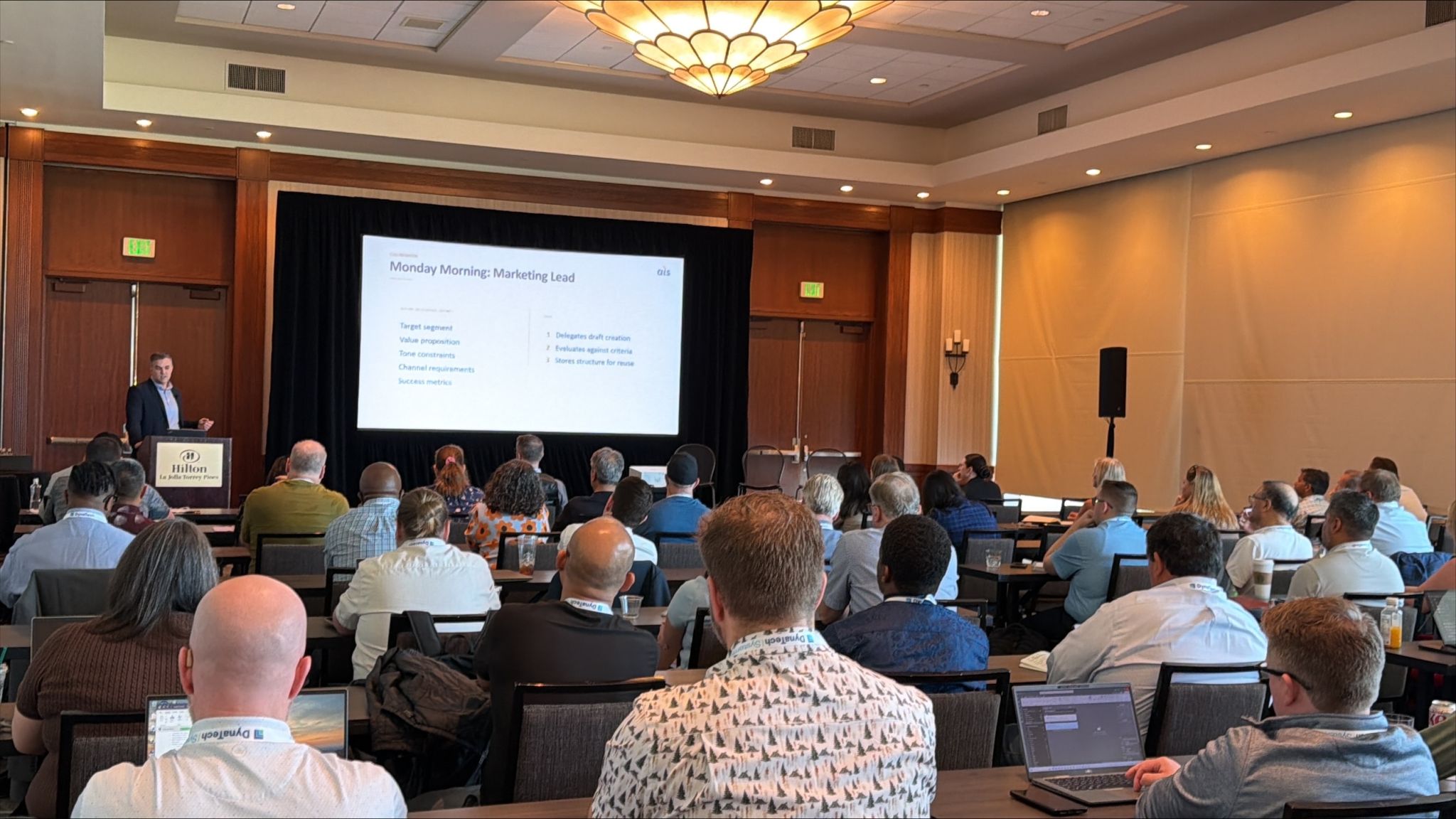
This week I had the opportunity to speak at the AI Agent & Copilot Summit, hosted by Dynamic Communities in Torrey Pines, just outside San Diego, where I shared a session titled "AI Literacy: Thriving in the Age of Generative AI."
The conversation around generative AI is maturing. Over the past year, the focus has largely been on understanding what the technology is, how it works, and where it fits in the current flow of work. That foundation is still important.
But the discussion is shifting toward something more practical: How does this actually change the way we work?
From Acceleration to Leverage
Most teams now have access to AI tools. Many are using them regularly. And the benefits are real. Faster drafts. Quicker analysis. Reduced friction in routine tasks. But in many cases, the underlying workflow remains unchanged.
- The same steps
- The same handoffs
- The same accountability
Just faster.
That is where the distinction between acceleration and leverage becomes important. In the session, I framed AI literacy as a progression:
- Tool User: AI accelerates execution
- AI Collaborator: Professionals define scope, set evaluation criteria, and build repeatable workflows
- Agent Orchestrator: Professionals design systems of agents and own the full output
What continues to stand out is that most of the meaningful progress is happening in that middle stage today. Not in better prompts, but in better structure.
Where Judgment Moves
Another theme that continues to resonate is the role of human judgment. As AI systems become more capable, the question is not whether that human judgment is still needed. It is where it sits.
- As a "Tool User": we evaluate AI outputs.
- As an "AI Collaborator": we start defining the work that needs to be done.
- As an "Agent Orchestrator": we govern the system that gets the work done.
That shift is subtle, but it has real implications for how we think about expertise. For many of us, expertise has traditionally meant being the one who produces the work. Increasingly, it means designing how the work gets produced, and being accountable for the system that delivers it.
Looking Ahead
If there is one takeaway that continues to solidify, it is this: AI literacy is no longer just about understanding the tools. It is about understanding how to structure work around them, and how to maintain clarity of ownership, evaluation, and judgment as that work becomes more distributed. That is where the real leverage is.