The Infrastructure That Outlives the Technology
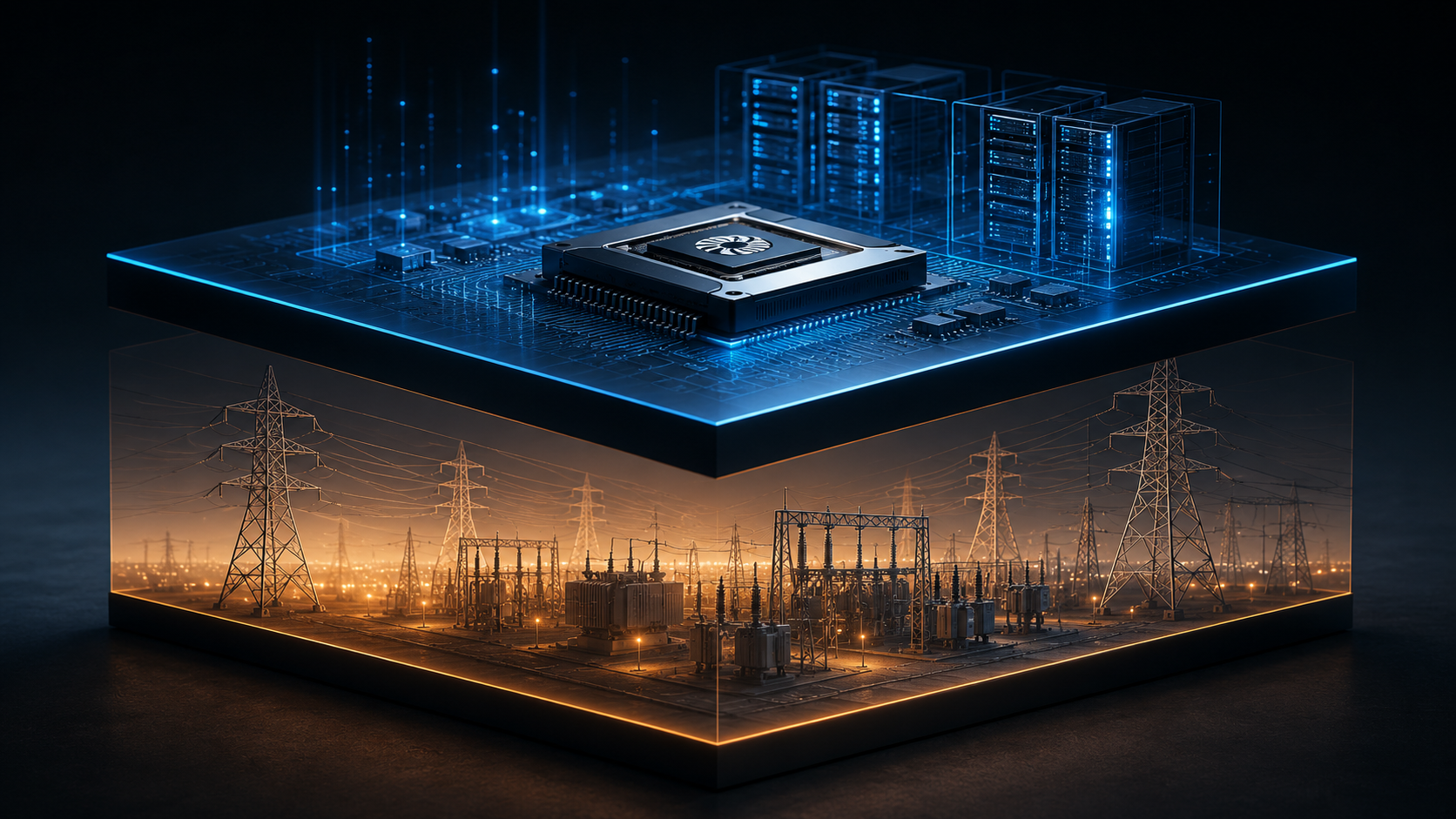 I had a pretty simple theory about the U.S.-China infrastructure race behind AI. It went something like this: The U.S. is racing to build the datacenters, chips, and compute capacity needed for AI. China, meanwhile, has spent years building something less glamorous but potentially more important: the electricity system underneath it.
The more I read, the less clean that story in my mind became. China had been aggressively building datacenters over the last several years too. Hundreds of AI infrastructure projects were launched across the country, and in some places the result was not scarcity but computing capacity sitting mostly idle. At the same time, China has continued adding power capacity. In 2025 alone, it added more than 500 gigawatts of new generating capacity (1). Over the past four years, its additions have been comparable to the entire installed generating capacity of the United States (2).
What changed for me was realizing those facts weren't actually contradictory. China can have too much poorly deployed AI compute and still have built the layer underneath it that doesn't go obsolete nearly as quickly. And that turns out to be the more interesting story.
The Asymmetry
Once I stopped thinking about the race simply in terms of who had built more, the asymmetry started to look more clear. The U.S. has better access to the most advanced AI accelerators and is deploying them at enormous scale. But increasingly, the constraint is becoming what it takes to turn all of that compute on. Goldman Sachs estimates U.S. data center power demand will grow from about 31 gigawatts in 2025 to 66 gigawatts in 2027 (3). It also estimates that only about 50 to 60 percent of the data center capacity scheduled for the next couple of years will come online on time. By 2030, U.S. spare generation capacity could fall below the 15 percent level (4) generally considered critically tight if AI-driven demand continues growing rapidly.
China has almost the inverse problem. It has built enormous amounts of generation and grid infrastructure, and by 2030 Goldman projects it could have roughly 400 gigawatts of effective spare power capacity (5), more than three times the expected power requirement of the world's data centers. But China has less access to the frontier chips needed to convert all of that electricity into state-of-the-art AI compute. U.S. export policy has loosened somewhat, but only up to a point. Certain Chinese companies have been approved to purchase Nvidia's previous-generation H200 chips (6), and limited shipments have now begun, while newer frontier systems remain restricted (7).
Each country is constrained at the layer where the other has surplus. But these aren't equivalent constraints. A compute constraint can change through innovation, efficiency, domestic manufacturing, trade, or policy. A power constraint ultimately changes through construction.
Two Clocks
That difference matters because the two constraints age very differently. Compute moves on a fast clock. New accelerator generations arrive quickly. Performance per watt improves. Model architectures change. Export rules can shift. The hardware that looks scarce today can become easier to obtain, or simply less valuable, a few years from now.
Power infrastructure moves on a much slower clock. Generation, substations, and transmission lines are built to last for decades. They take years to permit, finance, and construct, but once they are in place, they can support multiple generations of technology. That gives the slower layer something the faster one does not have: option value.
Much of China's excess generating capacity does not depend on guessing which chip architecture wins, which model becomes dominant, or which export policy survives the next few years. If access to better chips improves, if domestic accelerators get more competitive, or if models become dramatically more efficient, the power is still there waiting to serve whatever comes next.
The U.S. faces the opposite risk. It is investing heavily in the fastest-moving layer while depending on physical infrastructure that takes far longer to expand. If power, transmission, and interconnection cannot keep pace, some portion of that accelerator investment can spend its short useful life waiting for the infrastructure underneath it to catch up.
That is the part of this race that may be most important. The strategic value of the slow layer is not simply that it lasts longer; it's that it preserves options while everything above it keeps changing.
Accumulation Is Not Capability
China's datacenter overbuild might seem like the obvious counterargument to all of this, but I think it actually reinforces the point. The problem was not simply that China built too much, it was that much of the fast-moving layer was deployed badly. More than 500 AI datacenter projects were announced (8) across the country, and local reports suggest that in some areas up to 80 percent of the new computing capacity has sat idle. Reuters later reported utilization at many government-backed computing centers running at only 20 to 30 percent (9).
The more revealing part is why. GPUs were often distributed across smaller, disconnected facilities rather than assembled into the large, tightly integrated clusters modern AI workloads require (8). On paper, the hardware might add up to the equivalent of a 10,000-GPU cluster. In practice, it could not operate like one.
That is a very different failure from simply building ahead of demand. China accumulated the inputs, but accumulation is not capability. Beijing has since tightened approvals, increasingly confined large projects to the existing national computing hubs (10), and begun exploring a national cloud service to make better use of surplus capacity.
The two mistakes also age differently. For example, the GPUs sitting inside an underutilized facility are losing value while they wait (though some have recently said gpu depreciation may be overstated). Much of the generation and grid infrastructure underneath them can still serve whatever technology comes next. We do know that a stranded GPU depreciates, but a power grid waits.
That does not mean excess power is automatically strategic. Electricity still has to be generated in the right place, moved over sufficient transmission, interconnected to demand, and delivered at an economic cost. Building ahead creates options. It does not guarantee that those options will be useful. China's mistake was not building for the future, it was confusing the accumulation of fast-moving assets with the capability to use them.
The Same Mistake at Enterprise Scale
Many organizations are spending heavily on the fast-moving layer of AI; models, licenses, and vendor platforms. Those investments matter, but they also change quickly. The model that looks best today may not be the one a company prefers a year from now. Features migrate between products, pricing changes, and entire categories of tools get absorbed into larger platforms.
But the slower layer is less visible. It's the quality and accessibility of the data underneath the models, the workflows that determine where AI actually fits, and the people who have learned to work differently because of it. Those things take longer to build, but they also survive changes in the technology above them.
I've seen this firsthand in the way we measure AI adoption. A company can deploy thousands of licenses and still change very little about how work actually happens. The tools are present, but the capability is underdeveloped.
The durable enterprise layer is not the model. It is the organizational infrastructure that allows each new generation of models to become useful quickly.
Confusing the two layers is the same mistake China's datacenter buildout exposed at a much larger scale. Accumulating the fast-moving asset is not the same as building the system that makes it productive. The organizations that create the most lasting advantage from AI may not be the ones that commit earliest to a particular model or platform. They may be the ones that invest in the data, workflows, and people that can make use of whichever technology comes next.
What Lasts
The AI infrastructure race is usually measured in chips, models, and datacenters. They are the most visible signs of progress, and right now they are where much of the investment is going. But they are also the parts of the system changing fastest. That is why I am less convinced than I was that the most important question is simply who has the most compute today. The harder question may be who is building the physical infrastructure capable of supporting whatever comes next.
China has made plenty of mistakes in how it has deployed AI infrastructure, and its current chip constraints are real. The U.S. still holds important advantages at the frontier. But those advantages are being built on top of an electricity system that is becoming increasingly difficult to expand at the pace AI requires.
In a race defined by constant technological change, the most durable advantage may ultimately be the infrastructure that outlives the technology.
References
- National Energy Administration data, reported by OilPrice: https://oilprice.com/Latest-Energy-News/World-News/China-Added-543-Gigawatts-in-New-Power-Capacity-in-2025.html
- carboncredits.com: https://carboncredits.com/china-adds-power-7x-more-than-the-us-in-2025-with-500b-energy-build-out-in-a-single-year/
- goldmansachs.com: https://www.goldmansachs.com/insights/articles/us-data-center-power-demand-projected-to-double-by-2027
- Bloomberg.com: https://www.bloomberg.com/news/articles/2026-01-06/goldman-sachs-warns-us-grids-face-power-crunch-by-2030
- energyconnects.com: https://www.energyconnects.com/news/oil/2025/november/goldman-sees-china-power-push-giving-it-edge-over-us-in-ai-race/
- cnbc.com: https://www.cnbc.com/2026/05/14/us-clears-h200-chip-sales-to-10-china-firms-as-nvidia-ceo-looks-for-breakthrough.html
- techradar.com: https://www.techradar.com/pro/trump-set-to-allow-nvidia-h200-chips-to-be-exported-to-china
- MIT Technology Review: https://www.technologyreview.com/2025/03/26/1113802/china-ai-data-centers-unused
- Reuters (via Yahoo Finance): https://finance.yahoo.com/news/china-plans-network-sell-surplus-061531509.html
- aspistrategist.org.au: https://www.aspistrategist.org.au/abundant-electricity-isnt-enough-chinas-overbuilt-ai-computing-power-is-underused