AI Agent & Copilot Summit Keynote: Building AI Literacy
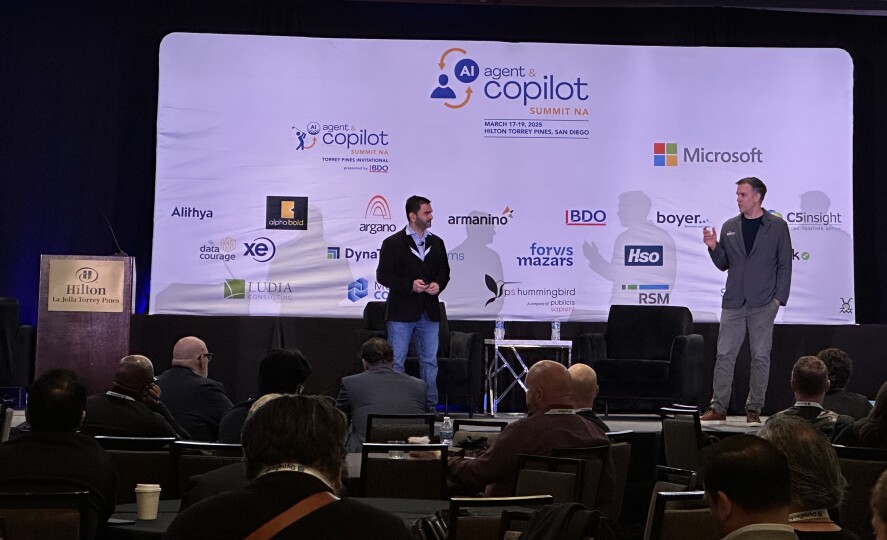
AI Agent & Copilot Summit, I had the opportunity to step back from tools and demos and focus on something more foundational: AI literacy. Not as a buzzword, and not as an attempt to turn everyone into an AI engineer, but as a practical understanding that knowledge workers, business leaders, and technologists now need in order to make good decisions.
The premise of the talk was simple. AI is no longer confined to data science teams. It is becoming embedded in everyday workflows through copilots, agents, and decision support systems. That shift changes the skill set required to use AI effectively. The competitive advantage is not just access to AI, but knowing how it works well enough to apply it responsibly and with intent.
We started by clarifying common points of confusion, especially the relationship between AI and machine learning. AI is the broader goal of machines performing tasks that once required human intelligence. Machine learning, and more recently deep learning, is one of the key engines that made modern generative AI possible. Understanding that distinction matters when evaluating tools, claims, and tradeoffs.
From there, we explored how not all AI behaves the same way. Discriminative AI classifies and predicts. Generative AI interprets, creates, and coauthors. Both are valuable, and increasingly they work together. But treating them as interchangeable leads to poor expectations and weak designs.
We then dug into how these systems actually work in practice. Training versus inference. Why inference is where most organizations interact with AI. Why transformer models changed what was possible. And why concepts like content chunking, embeddings, and vector databases are not academic details, but the mechanics that determine whether AI systems feel grounded or unreliable.
A major focus was on Retrieval-Augmented Generation. RAG is what makes generative AI practical for real organizations by grounding responses in domain-specific, up-to-date knowledge at inference time. Without it, large language models can sound confident while being wrong. With it, they become genuinely useful to knowledge workers.
The takeaway I hoped to leave the room with was this: AI literacy is about building confidence, not hype. It gives teams a shared mental model for how these systems work, what risks they introduce, and how to design for accuracy, trust, and scale. As AI agents move from novelty to real operational roles, that literacy becomes the difference between stalled pilots and sustainable impact.